
Lancaster County Criminal Records
Criminal court records in Lancaster County are maintained through the Court of Common Pleas, the Magisterial District Courts, and the Clerk of Courts. The Clerk of Courts is the chief filing office for Court of Common Pleas criminal and juvenile matters. Its work includes prison commitments, bail, motions, petitions, summary appeals, guilty pleas, trials, sentences, fines, costs, and criminal appeals. Magisterial District Courts are the first level of judicial authority for minor criminal matters, summary offenses, and preliminary proceedings before a case moves higher.
For most public searches, the statewide UJS Case Search is the starting point. It covers Pennsylvania appellate courts, Courts of Common Pleas, and Magisterial District Courts. UJS warns that recent entries from filing offices may lag online docket sheets, so a same-day filing or court action may not appear at once. Certified copies, record searches, expungement petitions, and limited access petitions are handled through the Lancaster County Clerk of Courts when the criminal case is local.
The Lancaster County Clerk of Courts page identifies the office as the criminal and juvenile filing office for the Court of Common Pleas. That office is separate from the Prothonotary, which handles civil and family files, and the Register of Wills / Clerk of Orphans' Court, which handles estates, guardianships, adoptions, and marriage licenses.
Search Lancaster County Criminal Records
UJS is the broad public case search route for Lancaster County criminal court records. It can be used for Common Pleas criminal cases and Magisterial District Court matters. A search may start with a participant name, case number, offense tracking number, police incident or complaint number, organization name, or state ID number when known. Selecting Lancaster County and the correct court level helps separate local cases from records in other Pennsylvania counties.
- Open UJS Case Search and choose the court level that fits the record, such as Common Pleas or Magisterial District Court.
- Search by defendant name, docket number, OTN, police complaint number, or SID if that identifier is available.
- Narrow the search to Lancaster County and review matching docket captions before opening a record.
- Read the docket sheet for charge rows, scheduled hearings, pleas, dispositions, sentence data, and financial entries.
- Contact the Clerk of Courts for certified copies or record searches when an online docket is not enough.
UJS docket review is free, but it is not the same as a Pennsylvania State Police criminal history check. The public docket is a court record. It may show charges, hearings, and outcomes, while a criminal history product is governed by the Criminal History Record Information Act. For custody status after a criminal filing, Pennsylvania VINE is a separate notification service, and Lancaster County Prison has its own inmate search process.
The Pennsylvania expungement statute is one reason a case may disappear from a public criminal court records search after later court action.
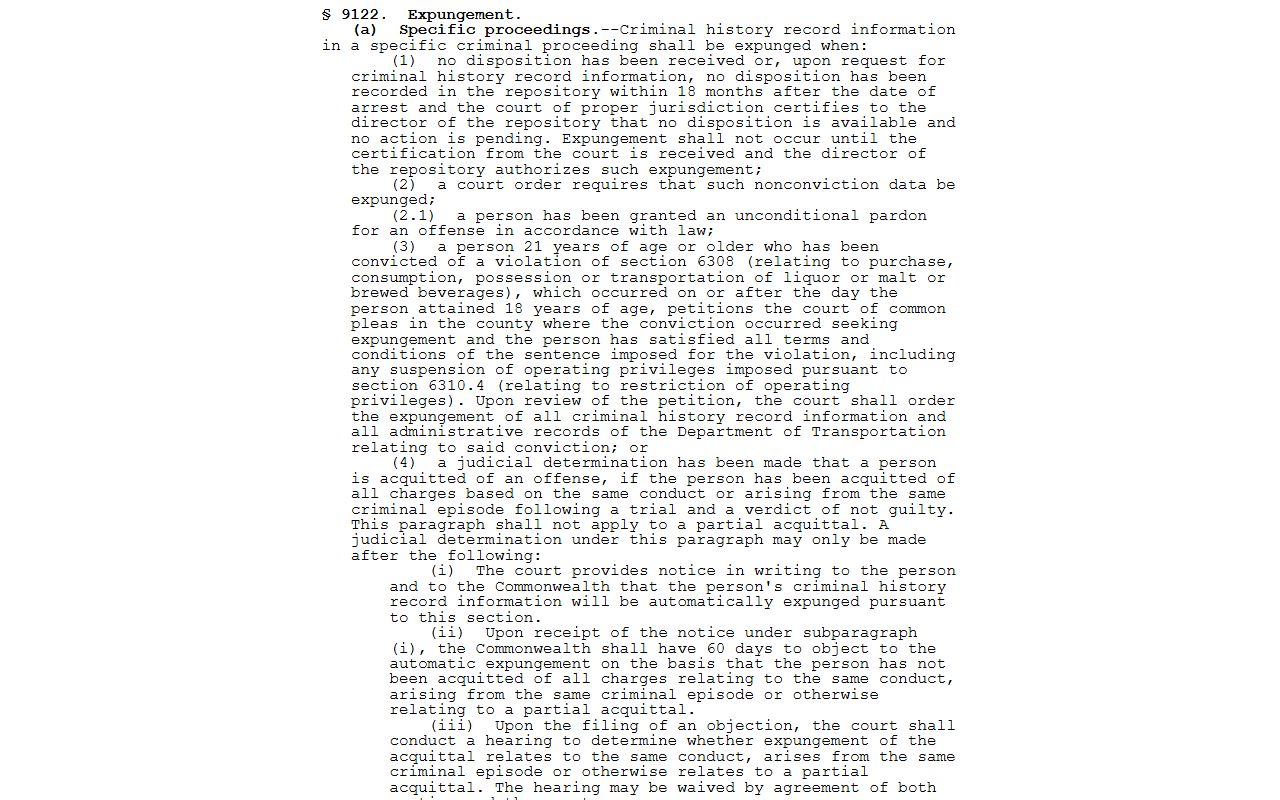
Expungement is not just a docket note. It changes whether qualifying criminal history record information remains publicly available.
Lancaster County Criminal Case Flow
A Lancaster County criminal court record grows as the case moves from charges to final outcome. Magisterial District Judges handle preliminary criminal steps and summary cases. The Court of Common Pleas handles felony cases, major criminal matters, summary appeals, treatment court tracks, pleas, trials, sentencing, and post-case petitions. The District Attorney's Office prosecutes felony and misdemeanor cases and appeals of criminal and summary convictions, while the Public Defender may represent eligible defendants when incarceration is possible.
Case flow: Charges Filed › Preliminary Arraignment › Preliminary Hearing › Common Pleas Arraignment › Pretrial Motions › Plea or Trial › Disposition › Sentencing
| Stage | What the Criminal Court Record May Show |
|---|---|
| Charges filed | Complaint number, OTN, arresting agency, offense date, statute, grade, and listed counts. |
| Arraignment and bail | Initial appearance, bail terms, commitment, release status, and future hearing dates. |
| Pretrial and motions | Motions, continuances, orders, discovery-related entries, treatment court referrals, and attorney appearances. |
| Plea or trial | Guilty plea, nolo contendere plea, non-jury trial, jury trial, verdict, or withdrawn charges. |
| Disposition and sentence | Outcome by count, sentence terms, probation, costs, restitution, and payment obligations. |
Note: A docket can be accurate as a court index and still be incomplete for background-check use.
What Lancaster County Criminal Records Show
Criminal court records should be read field by field. One case can include several counts, and each count can have its own grade, plea, disposition, and sentence. A defendant may be charged with several offenses after one event, but the final record may show fewer convictions than original charges. Costs, restitution, and bail entries can appear in the docket or payment systems when the case is public and payable.
| Field | What It Shows |
|---|---|
| Docket number | The Common Pleas CP number or Magisterial District Court MJ-style case number. |
| OTN | The offense tracking number used in Pennsylvania criminal matter tracking. |
| Complaint number | The police incident or complaint reference tied to the case. |
| Parties and counsel | Defendant name, attorney, prosecutor, judge, or issuing authority where public. |
| Charges | Statute, offense description, grade, filing date, and charge-specific status. |
| Docket entries | Hearings, motions, orders, continuances, pleas, verdicts, and sentencing events. |
| Financial data | Fines, costs, restitution, bail, payment plan, and possible PAePay eligibility. |
| Restrictions | Sealed, limited access, juvenile, expunged, or redacted information may not appear. |
The limited access statute matters when a record is not erased but is shielded from ordinary public dissemination.
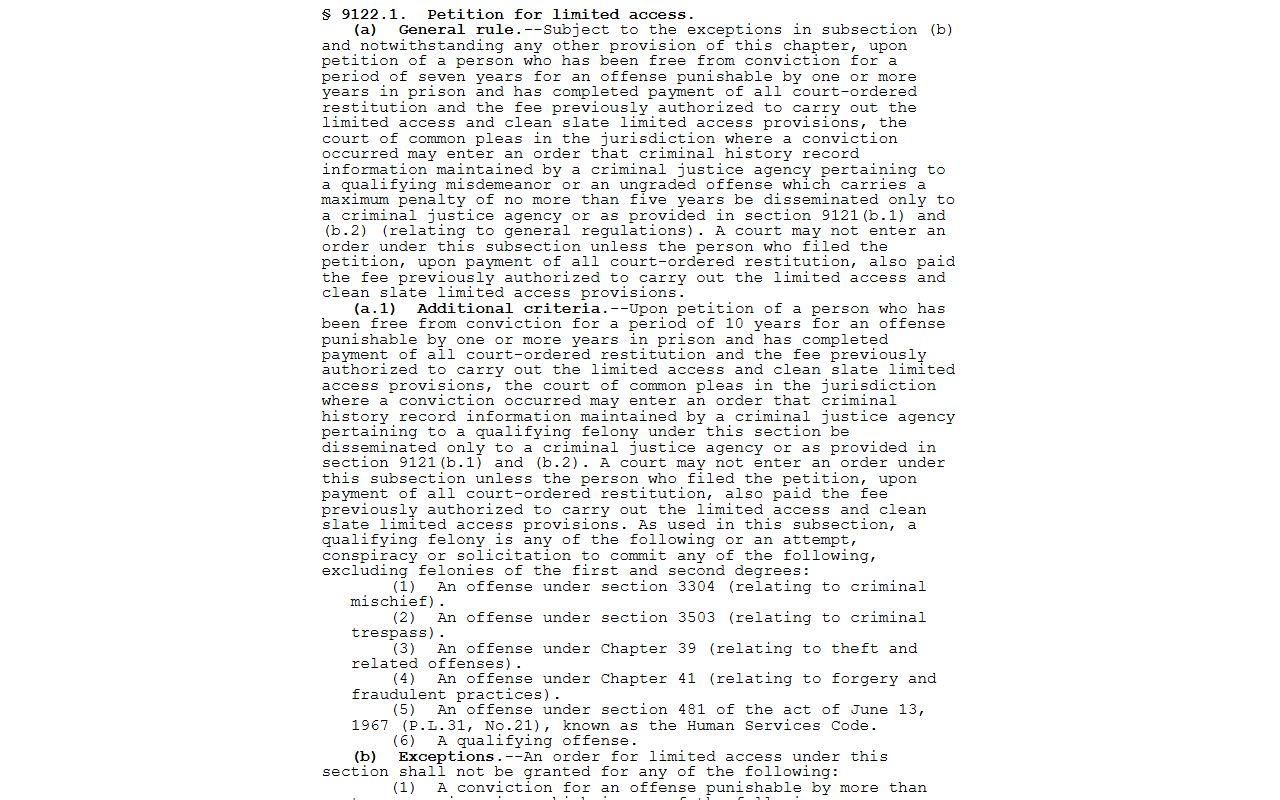
Limited access can explain why a prior Lancaster County criminal record is no longer visible in a public portal.
Lancaster County Charges vs Convictions
A charge is an accusation. A conviction is an outcome. Lancaster County criminal court records may show charges that were amended, reduced, dismissed, withdrawn, or resolved by plea. Reading only the first charge list can lead to the wrong conclusion. The disposition row is the key field because it tells what happened to that count after court review.
| Point | Charge | Conviction |
|---|---|---|
| Meaning | An alleged offense filed in a complaint or information. | A guilty finding, guilty plea, or other conviction outcome. |
| Timing | Appears near the start of the court case. | Appears after plea, trial, or final court action. |
| Record effect | May remain on the docket even if later dismissed. | May trigger sentence, costs, supervision, or collateral effects. |
| Best field to verify | Charge status and docket activity. | Disposition and sentence fields. |
For a closer look at the arrest-to-charges path, see the Lancaster County arrest records and court charges page.
The CHRIA dissemination rule affects how criminal history record information may be released outside the court docket context.
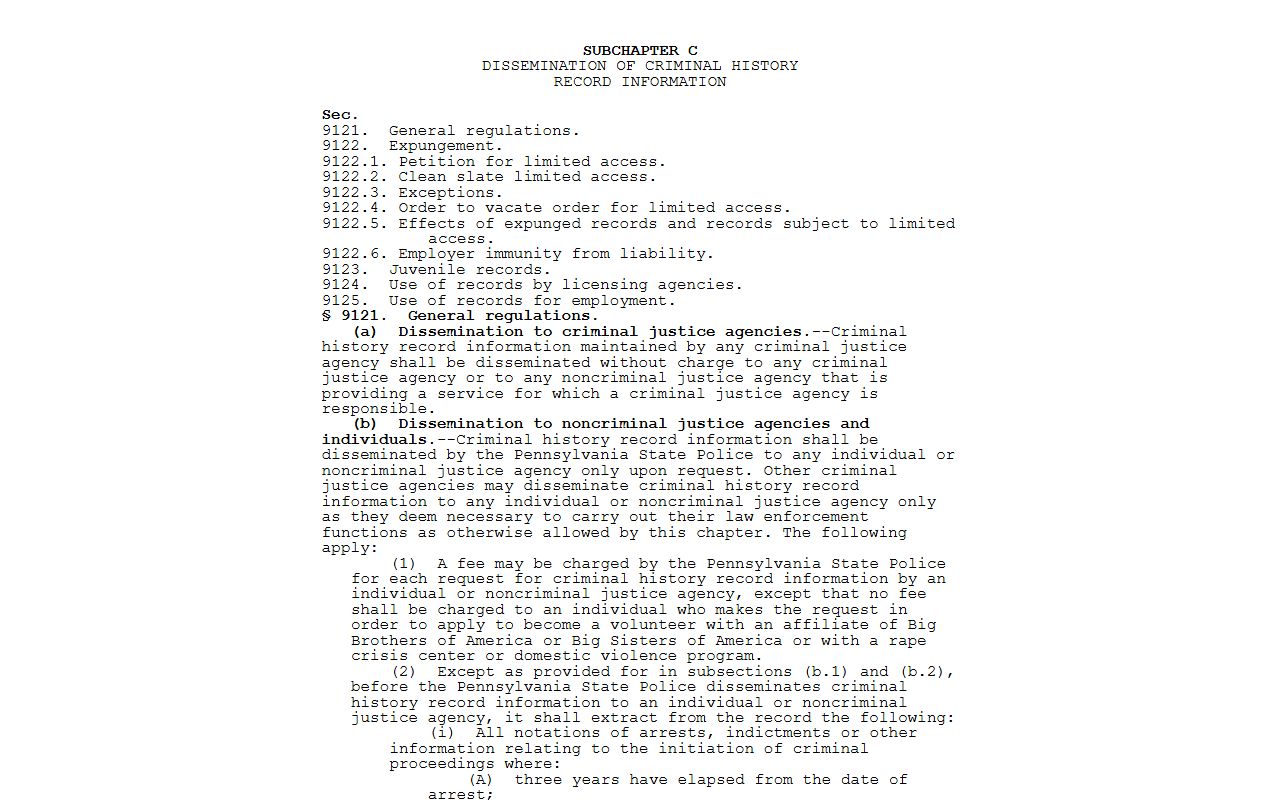
That distinction is why a court docket and a criminal history report may serve different uses.
Lancaster County Sealed Records
Pennsylvania separates several access limits. Expungement removes qualifying criminal history record information as defined by law. Limited access restricts public dissemination while preserving access for agencies that are allowed to see it. Sealed cases, minor-defendant cases, pending expungements, redacted captions, and certain confidential filings may not return in UJS or PAePay. Juvenile files have a separate rule set and are not treated like adult criminal court records.
| Point | Sealed or Limited Access | Expunged |
|---|---|---|
| Public visibility | The public portal may hide, redact, or limit the case while allowed agencies retain access. | Qualifying criminal history record information is removed as allowed by law. |
| Common route | Limited access or Clean Slate petition, court order, juvenile rule, or confidential filing rule. | Expungement petition filed in the Court of Common Pleas where the case occurred. |
| Search effect | UJS or PAePay may omit the case, show a redacted caption, or block public payment search. | Public criminal history and docket visibility may stop after the expungement is processed. |
| Lancaster County fee clue | The Clerk of Courts fee schedule lists limited access and Clean Slate petition fees. | The fee schedule lists separate adult and juvenile expungement petition fees. |
The juvenile inspection rule in 42 Pa.C.S. Section 6307 is one reason juvenile delinquency information is not searched like ordinary adult criminal court records.
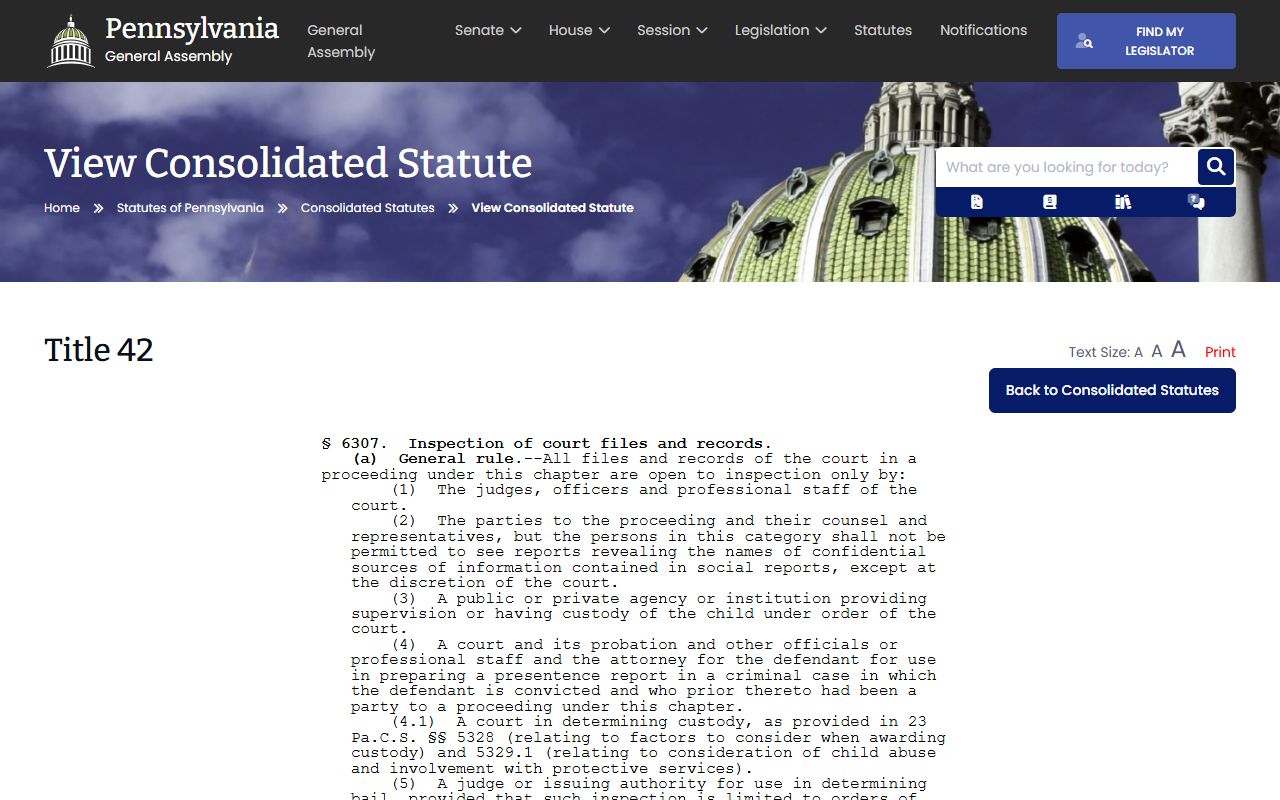
Juvenile limits should be checked before assuming a missing Lancaster County criminal docket means no case exists.
Lancaster County Sentences and Access
Disposition means the outcome of a charge or case. Sentence means the court-imposed penalty after a conviction or plea. A Lancaster County criminal court record may list probation, incarceration, fines, costs, restitution, or payment-plan details. PAePay may show payable balances, but it only returns cases with public status and obligations approved for online payment. A zero balance, sealed record, limited-access case, minor-defendant restriction, pending expungement, or redacted caption may keep a case out of the payment search.
Federal criminal records are separate. Lancaster County is within the Eastern District of Pennsylvania for federal court purposes, so federal cases are not filed as Lancaster County Common Pleas criminal court records. The U.S. Attorney for the Eastern District of Pennsylvania prosecutes federal crimes in the district, and federal dockets are accessed through federal systems rather than the county Clerk of Courts.
The federal source helps separate county criminal records from federal prosecution records involving Lancaster residents.
VINE is useful when the question is custody notification rather than case-file inspection. The Pennsylvania VINE service provides custody and criminal case notifications, while UJS remains the court docket search path.
Use VINE for alerts and UJS or the Clerk of Courts for the criminal court record itself.