
Lancaster County Court Records Structure
Lancaster County is Pennsylvania's Second Judicial District. The Court of Common Pleas is the county's trial court of general jurisdiction and handles major civil, criminal, family, juvenile, and Orphans' Court matters. Lower-level cases begin in Magisterial District Courts, which are the first level of judicial authority in Pennsylvania. Those courts handle traffic cases, minor criminal matters, landlord-tenant disputes, and civil claims up to $12,000.
Clerk duties are split. The Prothonotary keeps civil-side records such as complaints, judgments, liens, divorce, custody, PFA filings, name changes, and civil public-records requests. The Clerk of Courts keeps criminal and juvenile Court of Common Pleas filings, including bail, motions, petitions, summary appeals, and appellate appeal records. The Register of Wills / Clerk of Orphans' Court keeps probate, estates, adoptions, guardianships, inheritance tax processing, and marriage records.
The Lancaster County Court of Common Pleas homepage is the main local court starting point.
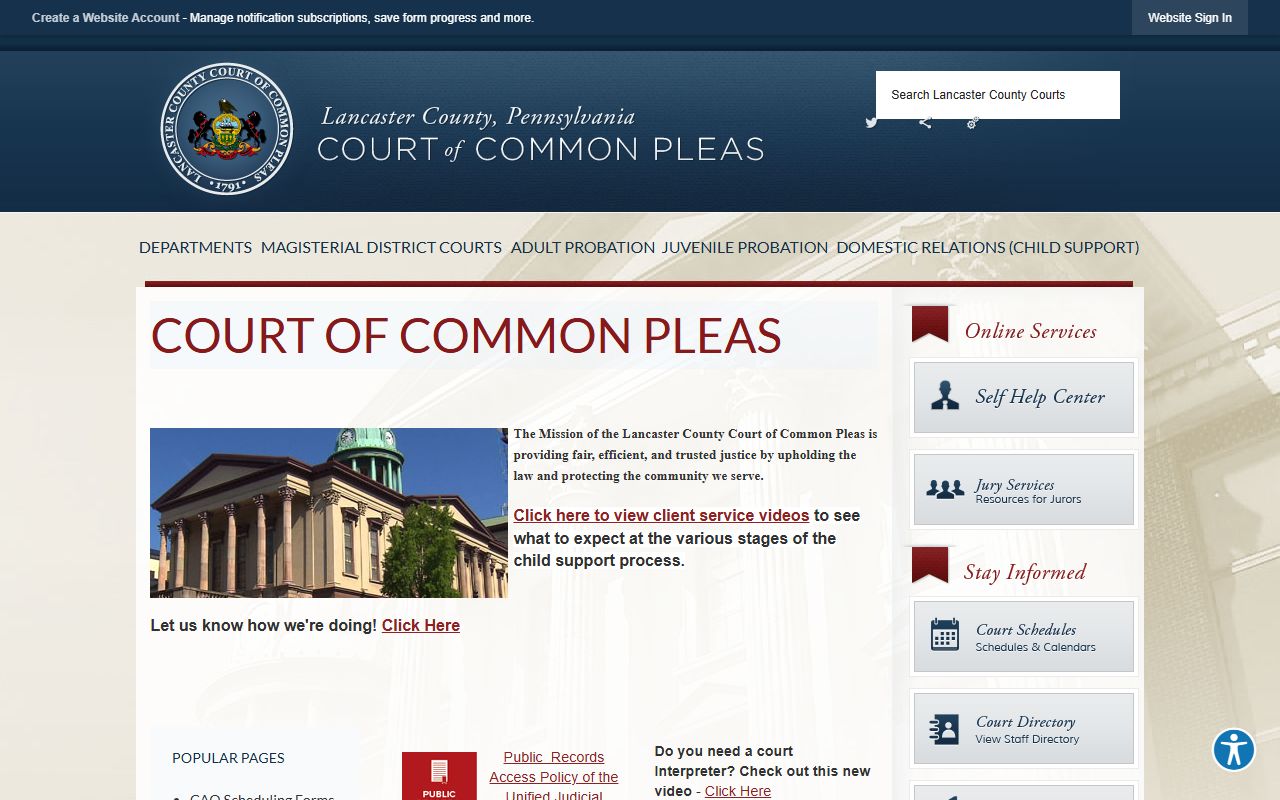
That court site anchors local court services, public access links, ADA and language access information, and court administration materials.
Search Lancaster County Court Records
Most public docket searches start with UJS Case Search. The system covers Pennsylvania appellate courts, Courts of Common Pleas, and Magisterial District Courts. It is useful for Lancaster County criminal dockets, many civil case dockets, traffic matters, summary cases, and MDJ records. UJS warns that recent entries made in filing offices may not appear right away, and public docket review is not a Pennsylvania State Police criminal history background check.
The Lancaster County public records hub is the local shortcut. It links civil and criminal court records, marriage license and probate record search, land records, and prison inmate search. Use it when the record is clearly held by a county office or when a state docket search does not point to the copy custodian.
- Identify the record type first: civil, criminal, traffic, family, probate, marriage, jail, warrant, or federal.
- Search UJS by case number, participant, organization, OTN, police incident or complaint number, SID, county, and court type.
- Use CountySuite for Prothonotary civil records when the county civil search is the better path.
- Use Paperless searches for Register of Wills and Orphans' Court probate or marriage records.
- Contact the correct filing office for certified copies, older files, or records not shown online.
The UJS Lancaster County courthouse listing confirms the county courthouse contact point and court hours.
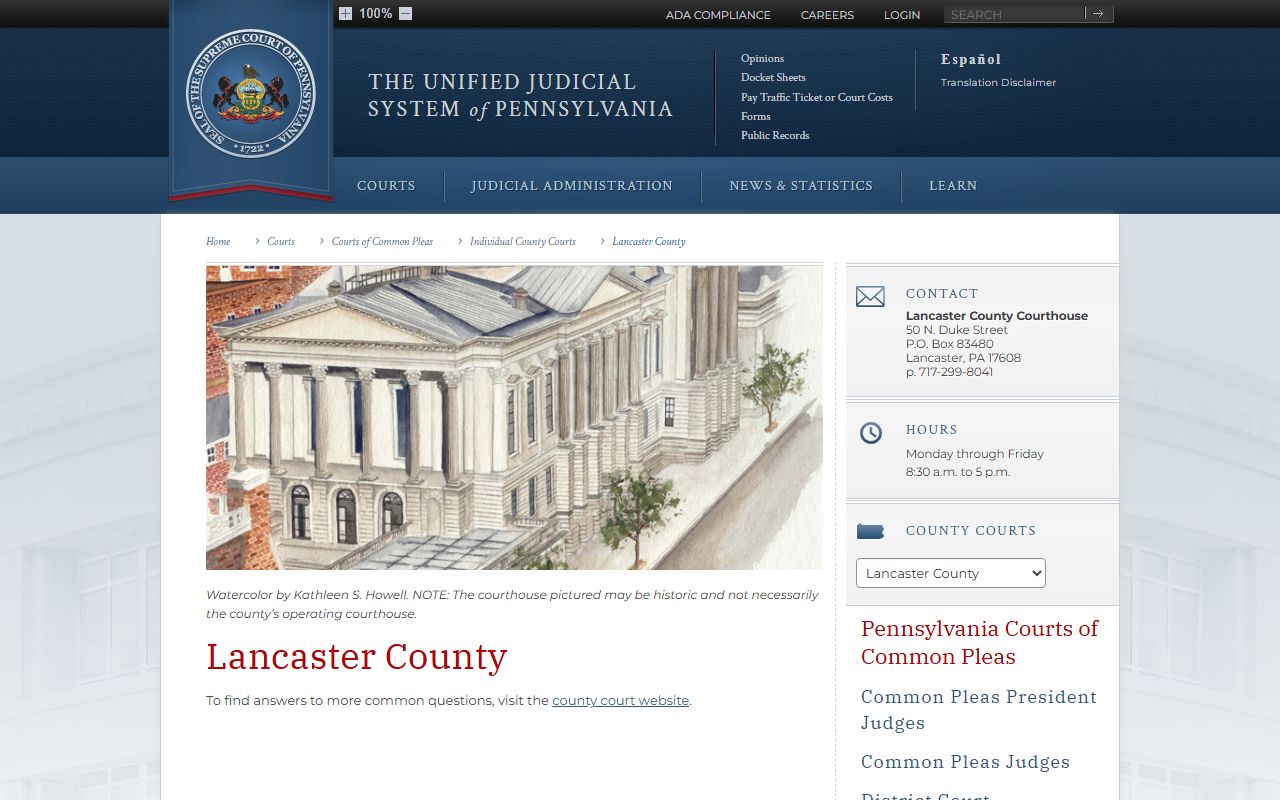
That listing is useful when a docket result needs to be tied back to the courthouse or local court administration.
Lancaster County Court Search Fields
The main search fields come from UJS and PAeDocket. Exact identifiers reduce false matches. Name searches help when a case number is unknown, but common names may need court type, county, or date filters. Criminal searches can use OTN or police complaint data when those numbers appear on paperwork.
| Field Label | Type | Required | Options / Format Notes |
|---|---|---|---|
| Search tabs | tab or radio | Unspecified | Common Pleas, Magisterial District Courts, appellate courts, and other UJS categories. |
| Participant Name | text | No | Person-based lookup. |
| Organization Name | text | No | Business or agency party lookup. |
| Case Number | text | No | Best exact-match docket search. |
| OTN | text | No | Offense Tracking Number for criminal matters. |
| Police Incident / Complaint Number | text | No | Supported by UJS and PAeDocket language. |
| SID | text | No | State ID number. |
| County | dropdown | No | Select Lancaster when shown. |
| Court Type | dropdown | No | Common Pleas or Magisterial District Court. |
The Lancaster County public records hub groups local record portals in one county page.
That hub is most useful when a search leaves the statewide docket system and moves to a county office record.
Lancaster County Court System
Pennsylvania's court hierarchy starts with Magisterial District Courts for many local matters, then the Court of Common Pleas for general trial work. Appeals can move to the Superior Court for many criminal and civil appeals, the Commonwealth Court for many government and agency matters, and the Supreme Court of Pennsylvania as the court of last resort. Lancaster County Court of Common Pleas is the main trial court for the county.
| Court | Role | Lancaster County Records |
|---|---|---|
| Magisterial District Courts | First local trial level. | Traffic, summary, minor criminal, landlord-tenant, and small civil claims up to $12,000. |
| Court of Common Pleas | Trial court of general jurisdiction. | Major civil, criminal, family, juvenile, and Orphans' Court matters. |
| Superior Court | Intermediate appellate court. | Many criminal and civil appeals from Common Pleas. |
| Commonwealth Court | Intermediate appellate court. | Many government and agency appeals. |
| Supreme Court of Pennsylvania | Highest state court. | Final state appellate review and statewide court administration. |
Case flow: Magisterial District Court › Court of Common Pleas › Superior Court or Commonwealth Court › Supreme Court of Pennsylvania.
Lancaster County Court Record Types
Record type controls the office, search tool, and access limits. Civil records include complaints, pleadings, service, judgments, liens, administrative orders, and related filings. Criminal records include charges, pleas, motions, bail, sentences, costs, restitution, warrants, expungement petitions, and limited-access filings. Family records can include divorce, custody, and PFA material. Probate and Orphans' Court records cover estates, wills admitted to probate, guardianships, adoptions, and marriage licenses.
Traffic cases usually begin in Magisterial District Courts. Payable balances may appear in PAePay if the case is approved for online payment. Warrants can involve Common Pleas bench warrants, District Attorney failure-to-appear warrants, Prothonotary warrants, Domestic Relations warrants, MDJ warrants, state probation or parole warrants, and federal warrants. Jail custody information is separate from the court docket, even when charges and bail are related.
| Record Category | Primary Custodian | Common Search Route |
|---|---|---|
| Civil and family | Prothonotary | CountySuite, UJS, and office requests. |
| Criminal Common Pleas | Clerk of Courts | UJS, Clerk of Courts copy requests, and PAePay when payable. |
| Traffic and summary | Magisterial District Courts | UJS and PAePay. |
| Probate and marriage | Register of Wills / Clerk of Orphans' Court | Paperless portal and courthouse office. |
| Jail custody | Lancaster County Prison | County inmate search and automated phone search. |
What Lancaster County Records Show
A Lancaster County docket can show the case number, court, county, case caption, case type, filing date, status, court office, judge, or issuing authority. Party sections show plaintiffs, defendants, petitioners, respondents, agencies, or attorneys when public. Criminal records can add OTN, complaint number, arresting agency, offense date, statute, grade, disposition, sentence, bail, costs, and restitution. Civil and family files can add complaints, writs, service, motions, orders, judgments, liens, custody records, divorce records, and PFA papers.
- Docket
- A chronological case register that lists events and filings.
- Disposition
- The outcome of a charge or case.
- Judgment
- A final civil decision or money award.
- OTN
- Offense Tracking Number used in Pennsylvania criminal matters.
- PFA
- Protection From Abuse case or order.
Lancaster County Public Access Rules
Pennsylvania access rules work in layers. The Right-to-Know Law applies to government records, but judicial agencies are treated differently and provide financial records under the act and court rules. The UJS Case Records Public Access Policy governs inspection and copying of case records and confidential filings. Criminal-history dissemination is controlled by CHRIA. Juvenile court file inspection is limited by statute. Lancaster County Courts also publish a Rule 509 page for court open-records requests that are not ordinary case-record inspection.
Key statutes and rules: Pennsylvania Office of Open Records overview explains the Right-to-Know Law; 65 P.S. Sections 67.101 et seq. is the statute; 204 Pa. Code Section 213.81 governs UJS case records; 18 Pa.C.S. Chapter 91 covers criminal-history information.
The Pennsylvania Office of Open Records RTKL overview is the statewide reference for the open-records law.
For Lancaster County court records, that state-law overview must be read with the special court-record policies and Rule 509 procedures.
The Pennsylvania Right-to-Know Law statute supplies the statutory framework.
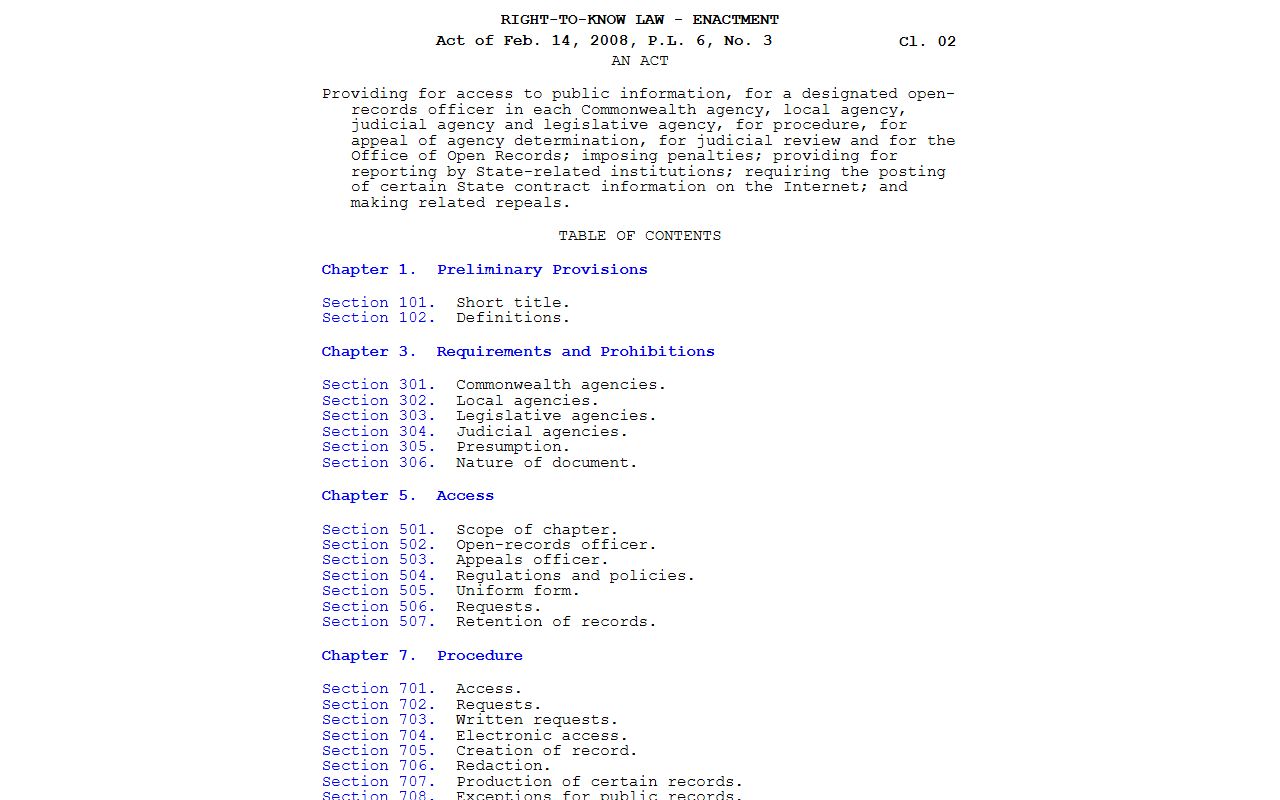
That statute is relevant for government records, while ordinary court case files often follow court-specific access rules.
Restricted Lancaster County Records
Restricted court records include juvenile files, adoption files, sealed cases, expunged cases, limited-access criminal cases, pending expungement matters, cases involving minors, and documents with confidential personal information. UJS and PAePay may omit these records or show only limited public data. The public access policy also expects filers to separate confidential information and confidential documents using required forms. A custodian is not required to fix a filing party's failure to redact noncompliant material.
Lancaster County Clerk of Courts fees include adult expungement petitions, juvenile expungement petitions, and limited access or Clean Slate petitions. Those filings can affect what the public can see online. The public-facing result may be a missing search result, a redacted caption, or reduced docket detail. Public search tools should not be treated as proof that a restricted case never existed.
Lancaster County Sheriff and Jail
The Sheriff's Office is at 50 N Duke Street with Sheriff Christopher Leppler and Chief Marc Shaffer listed in the research. The sheriff's site links wanted persons, VINE, the Sheriff Alert App, notifications, and tip submission through Crimewatch. The sheriff also posts scam warnings, including that the office will not demand online, telephone, gift-card, bail, jury, or court-cost payments through threatening calls.
Lancaster County Prison is at 625 E. King Street and uses an online inmate search plus an automated phone search. The county says callers may search by name or date of birth, with date of birth recommended. The phone system can provide charges, bail, visitation, and phone-account funding information. The online inmate search is captcha-gated and tied to CHRIA. Custody data is useful, but it is not a substitute for a court docket or warrant confirmation.
Lancaster County Probate and Marriage
The Register of Wills / Clerk of Orphans' Court is on the second floor of the courthouse. The office handles probate of decedent estates, inheritance tax processing, adoptions, guardianships, marriage licenses, and Orphans' Court filings. Marriage license applicants submit an online application and then appear for an oral interview. Certified marriage copies are requested from that office for licenses issued in Lancaster County.
Divorce is different. Divorce filings are Prothonotary family matters, and decree requests need party names plus the case number if known. The Prothonotary FAQ says certified divorce decree requests are mailed with a self-addressed stamped envelope, while non-certified requests may be emailed. Modern divorce docket searching starts with UJS and the Prothonotary civil search.
Lancaster County Court Record Fees
Fees vary by office. The Clerk of Courts fee schedule covers criminal and juvenile filings, copies, certifications, searches, expungements, limited access petitions, redaction, and summary appeals. Payments to the Clerk of Courts must be cash, certified check, or money order. Exact change is required for cash, and personal checks are not accepted. The Prothonotary and Register of Wills use their own fee schedules for civil, family, divorce, marriage, probate, and Orphans' Court work.
| Item | Amount |
|---|---|
| Clerk of Courts per-page copies | $0.25 |
| Clerk of Courts certified copy | $9.25 |
| Clerk of Courts record search | $22.75 |
| Adult expungement petition | $137 |
| Juvenile expungement petition | $36.75 |
| Marriage license | $75 |
| Certified marriage copy | $20 |
| Certified divorce decree | $20.50 |
Lancaster County Rule 509 Requests
Court administrative and financial-record requests use the Lancaster County Courts Rule 509 process. The court open-records officer is in the Office of Court Administration at P.O. Box 83480, 50 N. Duke St., Lancaster, PA 17608, with the email address listed in the research as lancastercourtrule509@lancastercountypa.gov. The court page states a 10-business-day response period and a possible 30-business-day delay. Denial appeals are due within 15 business days to the President Judge or designee through Court Administration.
The Lancaster County Courts Rule 509 open records page gives the court-specific request channel.
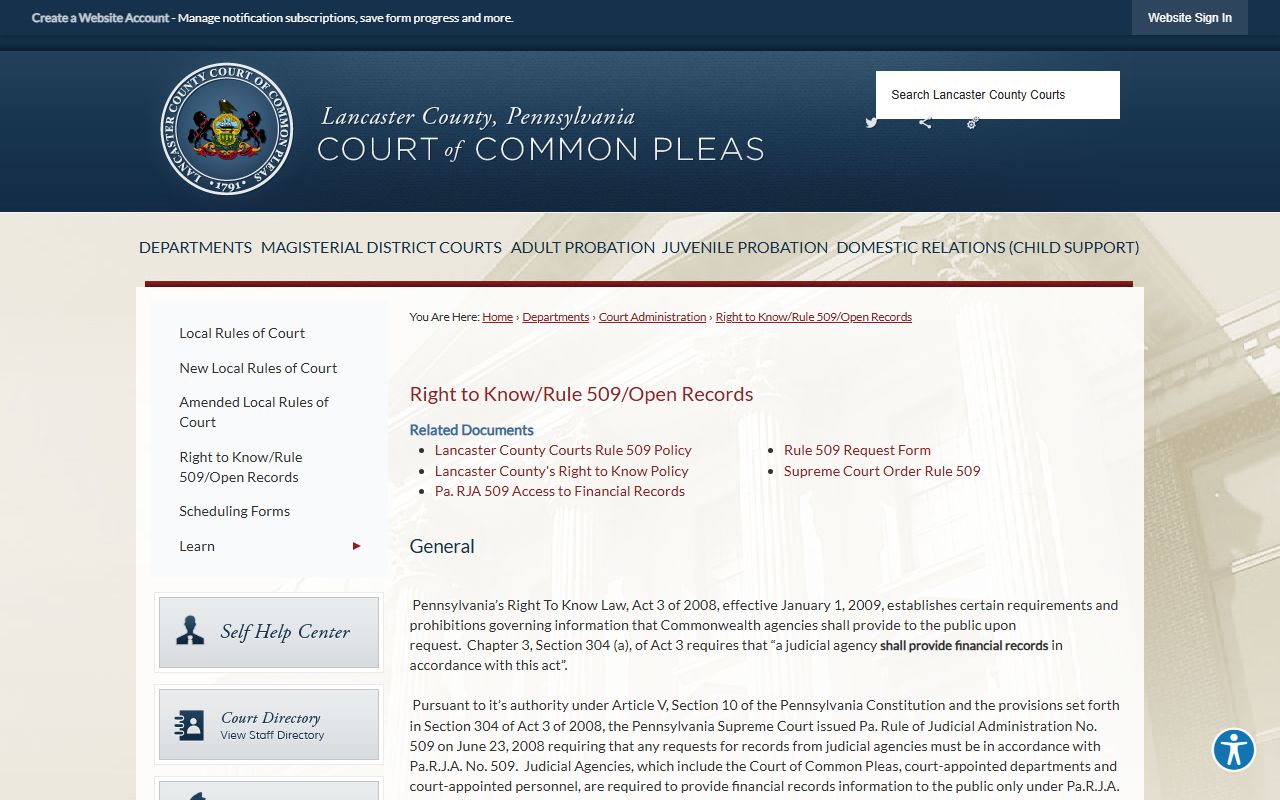
That Rule 509 path should not be confused with a normal request for a copy of a docketed case filing.
The county's open records request forms page links county, state, and court request forms.
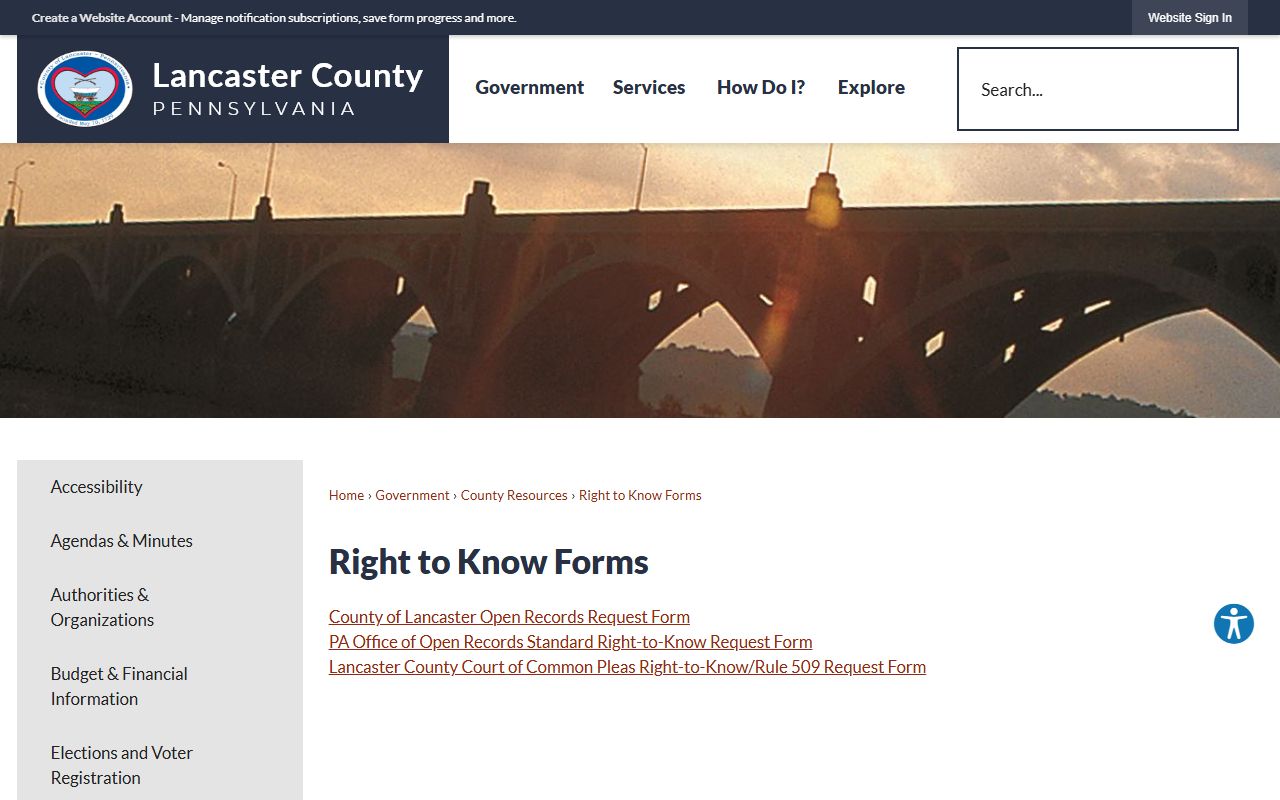
Choosing the correct form keeps a court request from being routed as a general county agency request.
Federal Records Near Lancaster County
Lancaster County is in the U.S. District Court for the Eastern District of Pennsylvania. Federal civil rights, federal crimes, diversity civil cases, federal-question matters, bankruptcy, federal appeals, and federal enforcement records are outside the Lancaster County Court of Common Pleas. PACER and federal CM/ECF are the official record systems for federal district and bankruptcy cases.
The U.S. District Court for the Eastern District of Pennsylvania is the federal trial court for Lancaster County federal matters.
Federal records should be searched through federal systems even when the person, business, or event is located in Lancaster County.
Lancaster County Court History
Lancaster County's legal history is older than the current courthouse. County material says the first downtown courthouse was completed in 1738 in the center of the Square, destroyed by fire in 1784, and replaced in 1787. When Lancaster served as Pennsylvania's capital from 1799 to 1812, that courthouse was known locally as the State House. Lawyers tied to that period included Thaddeus Stevens, James Buchanan, and Jasper Yeates.
The modern courthouse at 50 North Duke Street now anchors the Second Judicial District. The historic context matters because older records may not behave like modern online dockets. Some older civil, divorce, probate, and court history materials may require office contact, index review, or copy requests rather than a simple web search.
Lancaster County Court Records FAQ
Where should a Lancaster County court case search start? Start with UJS for public docket sheets, then use the county public records hub or the relevant filing office when the record type is civil, criminal, probate, marriage, jail, or warrant related.
Are online Lancaster County court records certified? No. Online dockets are public access records, but certified copies must come from the office that keeps the file.
Why is a case missing from search results? The case may be sealed, expunged, limited access, juvenile, adoption-related, very recent, entered under a different name, or held in a separate federal or county system.
Who keeps civil court records? The Prothonotary keeps civil-side records such as complaints, judgments, liens, divorce, custody, PFA, and related filings.
Who keeps criminal court records? The Clerk of Courts is the criminal and juvenile filing office for Lancaster County Court of Common Pleas records.
Are traffic records court records? Yes. Traffic cases usually begin in Magisterial District Courts, and payable balances may appear in PAePay when eligible.